


Slide Length Matters? An Experiment

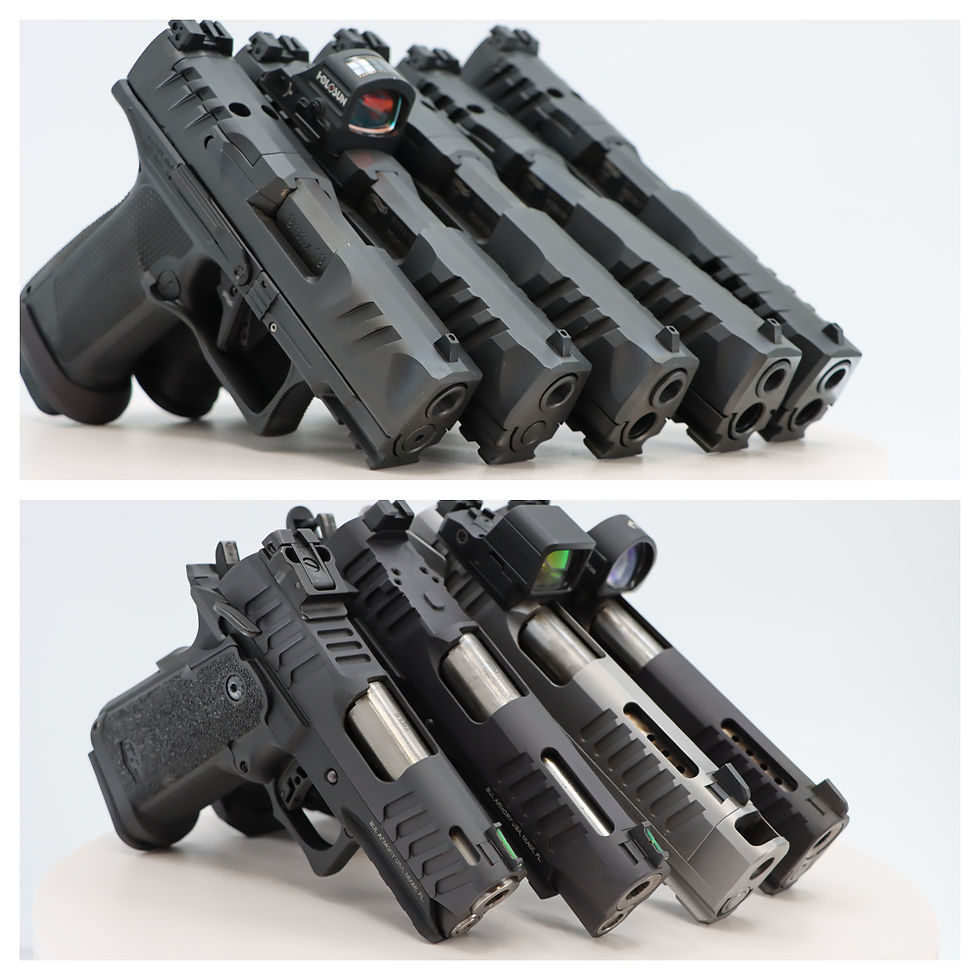
When comparing the BUL Armory TAC Pro against the BUL Armory TAC Comp we noted that slide mass and length differences might be apart of the difference in recoil impulse between the two. I, as many shooters, have a prefered barrel length for 9mm pistols not just for muzzle energy in a defensive scenario, but also for the rhythm produced during recoil.
Feeling the difference is easy, and something you may have noted, but not identified before. 3" (barrel) pistols tend to have an abrupt "pop" or "hop" to them regardless of grip length while the big 5" (barrel) guns have a slower "gallop" to them. My attentive shooting began with the 4"-barreled guns that were popular at the time, but I always enjoy 5" guns more on the range. The recoil felt softer and distributed across more time than shorter-barreled guns. Over time I've come to prefer the impulse of 4.25" guns for being more lively than a 5", but still softer than 4" and shorter.
Aside from nerding out, what if the difference in recoil impulses makes a real performance difference? To find out Anna and I hit the range with two different sets of guns. While I've shot a lot of rounds through a lot of handguns and attended several training opportunities Anna is on the other end of the spectrum with just a couple month's of handgun experience and no official training. With both of us shooting, we should see if experience plays a role or not.

The Test: To find which length gun's rhythm matches our shooting best we would make two "Bil Drill" runs with each gun on a torso at 7 yards, focusing on average split time for each gun. A "Bil" drill is five rounds instead of the classic "Bill Drill" of six rounds. These aren't revolvers, and ammunition comes out of boxes neatly in rows of five, so why bother with a sixth round? Accuracy was not of concern, the goal was to be as fast as possible and see if one length of gun seemed to work better with our natrual rhythm over another.
*NOTE: Some guns had optics, others didn't. While an optic might give an advantage in time getting on target, once splits are faster than human reaction time (0.3s) sighting system makes no difference aside from marginally impacting slide weight.
The Guns and Results: We set out with two sets of guns, deliberately reducing oother variables as much as possible by grouping by manufacturer.
Gun | Anna's Split Times Averaged | Graham's Split Times Averaged |
0.27s | 0.16s | |
PDP Compact 4" | 0.28s | 0.17s |
PDP Full 4.5" | 0.275s | 0.16s |
PDP Compact 5" | 0.275s | 0.165s |
0.275s | 0.15s |
Walther is an interesting one in that, aside from the F model, all pistols use the same recoil assembly from the 4" with spacers used to make it fit in the longer slides. This may shift the role slide length plays in recoil energy to the shooter and slide speed. Also of note is that two of the pistols had the Dynamic Performance Trigger in them. Can you tell which ones by the times? Aside from the 4" Compact swimming a little in both of our hands after shooting the F model, we had no notable experiential differences despite alternating between compact and full-size frames.
Gun | Anna's Split TImes Averaged | Graham's Split Times Averaged |
0.255s | 0.16s | |
0.255s | 0.15s | |
0.235s | 0.15s | |
0.245s | 0.15s |
The BUL Armory pistols varied more in their construction with the Ultralight and EDC having lighter and shorter aluminum frames while the TAC PRO and TAC COMP had heavier, full-length steel frames. The EDC model does have a DPM Systems recoil assembly installed in it which is another recoil-altering factor and why the slide did not lock open with the weak Fiocchi 9AP ammunition we had on hand. We felt more of a rhythm difference in the guns, or at least thought we did.
What can we conclude? For the two shooters in this experiment, when looking only at split times the slide rhythms made almost no difference. We did not look at accuracy, and focused on shooting when we felt ready, however seeing that splits were faster than human reaction time we know that out of five shots our brains only had two or three chances per run to react, and maybe one or two chances to process a change. As such, we must conclude that when running at full speed, regardless of personal preferences, slide rhythm has no impact on performance.
I'm willing to bet that had we slowed down a little and tried for a "flash" sight picture before each shot we might have had different total times with each gun, but that test would also have a long list of variables that might invalidate it.


Now take the fastest of each type and throw a good gas pedal on there. One like the Antimatter Industries Wing, where you can throw big pressure down with your offhand thumb and balance that with upwards pressure from the offhand fingers under the triggerguard, "pinching" the front of the gun just forward of the triggerguard.
Doing this pinch before the shot goes off is a total game changer for controlled rapid fire. It's kind of like doing a bunt in baseball where you're choking forward on the thing to increase tip control.
My carry piece, where I do this on an extreme budget:
https://imgur.com/gallery/61h11Jw
How this holster works:
https://youtu.be/RWFif9d3k00 - 44 seconds.